Menu
Same-Day Service Available!

If you have ever cleaned a couch, chair, or sectional and ended up with a bigger mark than the one you started with, you are not alone. A lot of homeowners search for how to clean upholstery because they want a fresh, comfortable home without turning one spill into a full-fabric problem. Water stains are one of the most common issues people run into during Upholstery Cleaning, and they can be frustrating because they often show up after you thought you were doing the right thing. One small spot turns into a ring. One light wipe turns into a darker patch. Suddenly, the furniture looks worse instead of better.
The good news is that water stains are often preventable. In many cases, they happen because too much moisture was used, the fabric was not cleaned evenly, or the upholstery dried too slowly. Once you understand why they happen, How to Clean Upholstery becomes much easier. You can treat spots more carefully, use less moisture, dry the fabric faster, and avoid the streaky or ringed look that makes DIY cleaning feel like a mistake.
For homeowners in Springfield, Tennessee, this matters because upholstered furniture gets used hard. Sofas collect dust, body oils, pet hair, crumbs, and the normal wear of daily life. Dining chairs, recliners, ottomans, and sectionals all take on mess over time. Therefore, knowing how to clean upholstery the right way is not only about one stain. It is about keeping your furniture fresh, attractive, and comfortable without causing new problems along the way.
This guide will walk you through How to Clean Upholstery without water stains, step by step. It will also explain why rings happen, what tools help, which mistakes to avoid, when DIY works, and when professional Upholstery Cleaning is the smarter choice.
Water stains usually happen because the fabric did not dry evenly. When moisture spreads through one part of the upholstery and dries in an uneven way, it can leave behind a visible outline or water ring. Sometimes the ring comes from the water itself. Other times it comes from loosened dirt, body oils, or residue in the fabric that gets pushed outward while the area dries.
This is why How to Clean Upholstery is not only about what cleaner you use. It is also about how much moisture you apply, how evenly you treat the area, and how quickly the fabric dries afterward. If you soak one section of a cushion and leave the rest dry, the edge where the moisture stops can become visible. In addition, if you scrub too hard, you can spread the mess farther out and create a larger cleaning mark than the original stain.
Another reason water stains happen is fabric type. Some upholstery materials are more forgiving than others. Microfiber, textured weaves, lighter fabrics, and certain blends can show moisture marks more easily. Because of that, Upholstery Cleaning should always begin with a little caution. A gentle, low-moisture method almost always works better than flooding the fabric and hoping it dries evenly on its own.
One of the biggest lessons in How to Clean Upholstery is this: more water does not mean better cleaning. In fact, too much water is often the thing that causes the biggest problem. Furniture fabric is different from a kitchen counter or tile floor. You cannot just soak it, wipe it down, and call it done. Upholstery holds onto moisture. Cushions, seams, and padding underneath can all stay damp longer than the surface suggests.
Low-moisture Upholstery Cleaning is usually the safer path. It helps reduce the chance of rings, shortens drying time, and makes it easier to control where the cleaning solution goes. It also helps avoid that damp, stale smell that can appear when furniture stays wet too long. For families in Springfield, Tennessee who want a cleaner home without waiting all day for a couch to dry, this matters a lot.
This is also one reason professional Upholstery Cleaning often works better than aggressive DIY methods. A safer, faster-drying process is easier on the fabric and easier on your schedule. While DIY spot cleaning can absolutely work for small issues, learning how to clean upholstery without oversaturating it is the real key.
Before doing anything else, check the furniture tag if it is still attached. Many upholstered pieces have a cleaning code that tells you what kind of approach is safest. This step matters because How to Clean Upholstery depends partly on what the fabric can handle.
Common codes include:
Even if the tag says water-based cleaning is okay, do not assume that means “use a lot of water.” It simply means water can be part of the process. You still want a careful, controlled approach.
Also, test any cleaner in a small hidden area first. Try the back edge of a cushion or a less visible corner. This helps you see whether the fabric darkens, stiffens, or reacts badly before you treat a more noticeable area.
You do not need a huge setup to clean upholstery well, but a few basic tools help a lot. If you are trying to figure out how to clean upholstery without creating water stains, the right supplies make the process much easier.
Helpful tools include:
White cloths matter because they reduce the risk of dye transfer. Microfiber cloths are helpful because they absorb well without being too rough. A spray bottle also matters because it helps you control the amount of moisture instead of dumping too much onto the fabric all at once.
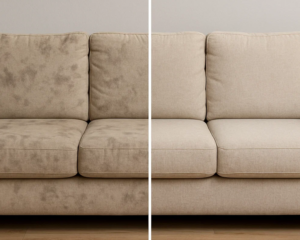
Always start dry. Before you use any cleaner at all, vacuum the furniture thoroughly. This removes dust, crumbs, hair, and loose debris that would otherwise turn into muddy residue once moisture is added. Vacuum the surface, the creases, under cushions, and along seams.
This step matters more than people think. If loose dirt stays on the fabric, even careful Upholstery Cleaning can spread it around and create a larger stain area. Therefore, if you want to know how to clean upholstery the right way, the first answer is often “vacuum more than you think you need to.”
This is especially important in homes with pets. Pet hair and fine debris can make a damp area look dirtier as soon as you start blotting. If you are already dealing with pet odor removal, pet stain removal, or pet accident cleaning on furniture, removing loose debris first gives you a much cleaner starting point.
If the stain is fresh, blot it right away with a clean dry towel or cloth. Do not rub. Blotting helps absorb liquid before it spreads deeper into the fabric or outward across a larger area. Press gently but firmly, and keep switching to a clean dry section of the cloth as it picks up moisture.
Rubbing is one of the fastest ways to make a stain worse. It can push the spill deeper, spread the mess outward, and rough up the fabric surface at the same time. So, before thinking about any cleaning solution, take a moment to absorb as much of the spill as possible.
This applies whether the issue is coffee, juice, food, or a pet-related problem. Early action often makes a huge difference, especially with pet urine removal, dog urine removal, or cat urine removal situations where moisture can sink in quickly.
If the stain remains after blotting, the next step is a controlled cleaning solution. The key word here is controlled. One of the biggest mistakes people make while learning how to clean upholstery is using too much liquid too soon.
If your upholstery allows water-based cleaning, lightly mist a cloth, not the furniture itself, with an upholstery-safe solution. Then gently blot the stained area. You want the cloth damp, not dripping. If you spray directly onto the fabric, it is easy to oversaturate the spot and create a ring.
Work from the outside of the stain toward the center. This helps contain the problem instead of spreading it farther. Keep your motions light and patient. Upholstery Cleaning usually works better with repeated gentle passes than with one aggressive scrubbing session.
This step is one of the best tricks for avoiding water rings. If you only clean a tiny spot in the middle of a larger panel or cushion, the edges of the damp area may dry into a visible ring. To reduce that risk, gently feather your cleaning slightly beyond the stain into the surrounding fabric.
You are not soaking the whole cushion. You are just lightly blending the cleaned area into the nearby fabric so there is not such a harsh drying line. This helps the surface dry more evenly and makes the cleaned section less obvious afterward.
This is one reason professional Upholstery Cleaning often looks more even than DIY spot treatment. The process is not only about removing the stain. It is about blending the result so the furniture still looks natural.
After using the damp cloth and solution, immediately follow with a dry white towel. Press gently to lift as much moisture as possible from the fabric. This is a very important part of How to Clean Upholstery without leaving water stains behind.
Do not skip this step. A lot of people apply the cleaner and then let the upholstery air dry on its own. However, the less moisture left in the fabric, the lower the chance of a visible ring later. Blotting with a dry towel helps pull out moisture along with any loosened residue.
Repeat the cycle if needed:
This process may feel slower, but it is usually much safer than doing one heavy wet cleaning pass.
Fast drying is one of the most important parts of successful Upholstery Cleaning. Once you have cleaned the area, set up airflow right away. Open windows if the weather allows. Turn on ceiling fans. Use a floor fan pointed across the fabric to keep air moving.
A damp couch cushion may feel “almost dry” on the surface while still holding moisture underneath. Therefore, give it help. Faster drying reduces the chance of water marks, stale odor, and that slightly crunchy feel upholstery can get when moisture sits too long.
This is especially important in humid weather or in homes with less airflow. If the room feels heavy, a dehumidifier can also help.
Once the area is almost fully dry, lightly brush or fluff the fabric if the material allows it. This can help restore the texture and keep the cleaned section from looking pressed down or slightly different from the surrounding fabric.
Do this gently. The goal is not to scrub. It is just to help the upholstery look even again. For microfiber or textured fabrics, this can make a noticeable difference after cleaning.
This is the biggest one. Too much water almost always makes drying harder and water stains more likely.
Aggressive scrubbing can spread the stain and rough up the fabric.
It is usually safer to dampen the cloth first rather than soaking the upholstery surface.
Only treating a tiny spot often creates a visible difference when the area dries.
If you do not use airflow, the surface may dry unevenly and create a ring.
Colored cloths may transfer dye, especially on lighter upholstery.
DIY Upholstery Cleaning works best for:
DIY becomes less effective when:
If the furniture still smells off after cleaning, if rings keep forming, or if the stain keeps returning, professional Upholstery Cleaning is usually the better next step.
Pet-related stains are different from simple food or drink spills. Pet urine removal, pet odor removal, and pet urine carpet cleaning get discussed a lot with floors, but upholstered furniture can carry the same kind of odor problems. If a dog or cat had an accident on a couch cushion or chair, the issue may go deeper than the visible area.
In these cases, how to clean upholstery becomes more complicated because you are not only trying to remove a mark. You are also trying to manage odor elimination without oversaturating the fabric. Too much moisture can actually worsen the problem if it pushes the issue deeper or slows drying too much.
Therefore, if the upholstery has pet accident cleaning needs, dog urine removal, cat urine removal, or pet odor eliminator concerns, it often makes sense to get professional help sooner rather than later.
Professional Upholstery Cleaning usually works better for larger or riskier jobs because the process is designed around controlled moisture, better extraction, and faster drying. That matters a lot when you are trying to avoid rings and uneven results.
Homeowners searching for Upholstery Cleaning near you or best carpet cleaning often want the same thing in the end: a practical result without the trial and error. If your furniture needs more than a quick spot cleanup, professional care can save time and prevent the frustration of making the fabric look worse by accident.
This is especially true when Upholstery Cleaning connects to other services like area rug cleaning, oriental rug cleaning, or even a broader home refresh. If the rug, couch, and nearby carpet all need attention, one solid appointment may be more useful than several DIY sessions.
The best way is to use as little moisture as possible, blot instead of scrub, and dry the area quickly with fans. How to Clean Upholstery without water stains comes down to controlled moisture, even cleaning, and fast drying.
Water rings usually happen because the fabric dried unevenly or because dirt and residue were pushed outward while the area was drying. Upholstery Cleaning works better when the cleaned area is blended slightly and blotted dry right away.
It is usually safer to spray the cloth first instead of spraying the furniture directly. This gives you more control and helps reduce the chance of oversaturation.
No. Always check the furniture tag first. Some fabrics are water-safe, while others need solvent-based care or professional Upholstery Cleaning. Testing a small hidden area first is always smart.
Use dry towels to remove as much moisture as possible, then set up fans and airflow immediately. A dehumidifier can also help in humid rooms. Fast drying is one of the biggest parts of successful Upholstery Cleaning.
Not always. Pet-related issues often involve deeper odor and moisture problems. Pet urine removal, pet odor removal, and pet stain and odor removal may need more than a simple surface blotting method.
It is a good idea to call a professional when the stain is older, the odor lingers, the fabric is delicate, or you keep getting water rings after DIY cleaning. Professional Upholstery Cleaning is often the safer option when the furniture needs more than a quick touch-up.
Learning how to clean upholstery without water stains is really about being more careful with moisture from the beginning. Less water, more blotting, better airflow, and a little patience usually lead to much better results. The goal is not just to remove the stain. The goal is to leave the furniture looking even, fresh, and comfortable when you are done.
If your sofa, chair, or sectional keeps showing rings after DIY cleaning, or if the fabric feels less fresh no matter what you try, it may be time to stop guessing and let a professional handle it. Upholstery Cleaning should make the room feel better, not create a second problem you now have to fix.
If your furniture looks tired, feels less fresh, or keeps getting water marks after DIY spot cleaning, now is a great time to schedule professional Upholstery Cleaning. Safe-Dry of Springfield, Tennessee can help you refresh your furniture with a safer, faster-drying process that fits real life. Book your Upholstery Cleaning today and bring comfort back to the rooms you use most.